


The dream of a common river.
The idea that gave rise to CHE
The vision of comprehensive management of the Ebro River is born. From the Water Act (1879) to the founding of the CHE, through Joaquín Costa's regenerationism and Manuel Lorenzo Pardo's confederate model.
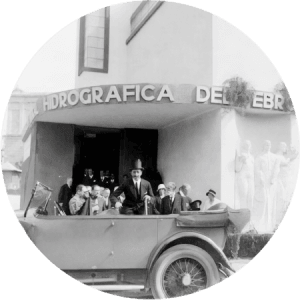
Divided waters.
The Civil War and the fragmentation of the CHE
During the Civil War, the CHE was divided and its functions were paralyzed. The institution suffers damages, duplications and a temporary loss of operational efficiency.

A contained channel.
Hydraulic expansion in times of reconstruction
The works projected during the founding period are consolidated, more than forty reservoirs and large canals make Spain enters its developmental era. The CHE leads the hydraulic policy of the Franco regime with a technical and centralized model that transforms the landscape and irrigation.

The democratic awakening of the river.
Towards a new water awareness
The democratic transition and the 1985 Water Law transformed the management model, incorporating public participation, environmental sustainability and water quality control.

A river to take care of.
The century of agreement
The Water Framework Directive consolidates river basin planning. Strategies to tackle climate change are being implemented, such as risk plans, river restoration and the Ebro Resilience and Ebro Fluye programmes.

The dream of a common river.
The idea that gave rise to CHE
The vision of comprehensive management of the Ebro River is born. From the Water Act (1879) to the founding of the CHE, through Joaquín Costa's regenerationism and Manuel Lorenzo Pardo's confederate model.
Divided waters.
The Civil War and the fragmentation of the CHE
During the Civil War, the CHE was divided and its functions were paralyzed. The institution suffers damages, duplications and a temporary loss of operational efficiency.
A contained channel.
Hydraulic expansion in times of reconstruction
The works projected during the founding period are consolidated, more than forty reservoirs and large canals make Spain enters its developmental era. The CHE leads the hydraulic policy of the Franco regime with a technical and centralized model that transforms the landscape and irrigation.
The democratic awakening of the river.
Towards a new water awareness
The democratic transition and the 1985 Water Law transformed the management model, incorporating public participation, environmental sustainability and water quality control.
A river to take care of.
The century of agreement
The Water Framework Directive consolidates river basin planning. Strategies to tackle climate change are being implemented, such as risk plans, river restoration and the Ebro Resilience and Ebro Fluye programmes.